Simply explained
Break-even point: how many sales cover your costs?
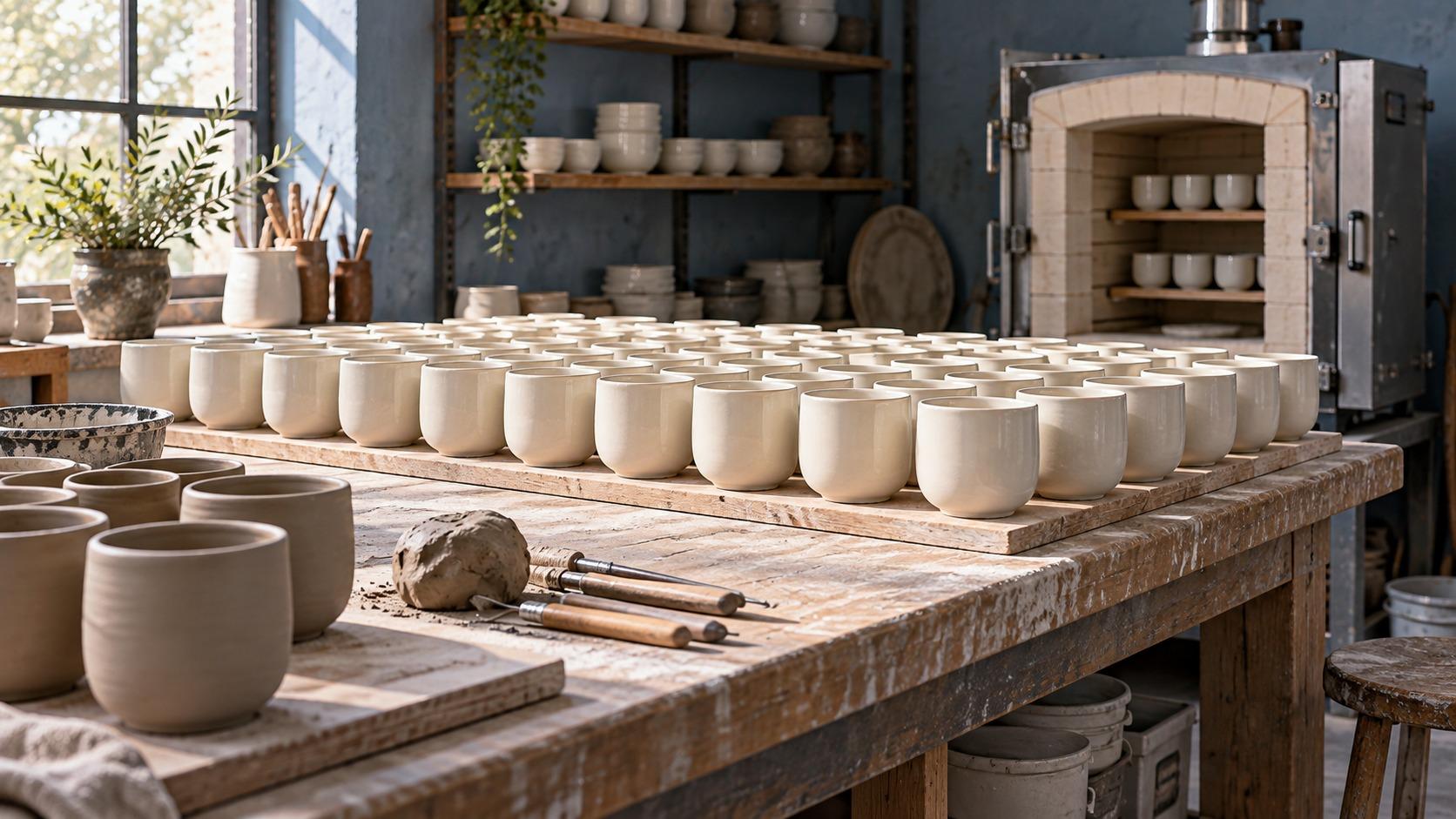
A workshop has sold plenty of cups. Has it earned a profit? First it must cover materials, labour, premises and other costs. The sales volume at which revenue equals the costs included in the calculation is called the break-even point.
Imagine a small workshop
All figures below are an editorial teaching example for one month, not prices from an actual business. The workshop sells identical cups for RUB 1,000 each. Variable costs per cup sold are RUB 400: materials, packaging, piece-rate labour and other expenses that rise with sales.
Each sale leaves RUB 600 towards fixed costs. That amount is not net profit.
Suppose the workshop has monthly fixed costs of RUB 60,000, unchanged at the activity levels in this example. Dividing 60,000 by 600 gives 100 cups.
Selling 100 cups produces revenue of RUB 100,000. Variable costs use RUB 40,000 and fixed costs another RUB 60,000. The workshop breaks even on the costs included. Selling 120 cups on the same terms leaves RUB 12,000 before any expenses and taxes omitted from the example.
Three numbers to start with
You need fixed costs for the chosen period, the price per sale and variable costs per unit. For a single-product model:
Break-even sales volume = fixed costs ÷ (price − variable cost per unit).
The method is explained in the SBA guide to break-even analysis. If the price does not exceed variable costs, there is no positive break-even volume that covers fixed costs: extra sales alone will not solve the problem.
Calculate a discount before offering it
Return to our fictional workshop. A 10% discount lowers the price to RUB 900. With unchanged variable costs, each cup now contributes RUB 500. Covering RUB 60,000 requires 120 cups instead of 100, or 20% more sales.
This is not an argument against every discount. It is a question to test: can the workshop really sell twenty extra cups without additional costs or overloading employees? If another shift or higher delivery expenses are necessary, update the calculation.
Check the assumptions
- Is the owner's labour included? Treating it as free can hide the real cost of the business.
- Have you included fees, defects, returns, equipment maintenance and applicable taxes? Add omitted costs instead of calling the remainder profit.
- Is the required sales volume achievable? Production capacity is not proof of demand.
- Will the product mix stay the same? Cups and large vases may contribute different amounts per sale, so one formula cannot simply represent the whole range.
The OpenStax managerial accounting textbook explains the relationship between sales, costs and results. A real decision requires checking your own model's assumptions.
There is also a separate timing question: when will customers pay and suppliers need payment? Break-even analysis does not replace a payment calendar. A business can cover its costs on paper and still run short of cash on a particular day.
Start with one product and one month. Write down the three inputs, check them against your records and calculate a discount scenario separately. Then discuss how many sales you need and whether you can deliver them while preserving quality and working conditions.
Sources checked on 18 September 2026. The example and questions are editorial work. This explanation does not promise a profit.